

Radio Patio
Federico Chueca: the composer behind Chueca's name
Chueca is more than a neighbourhood: it's a name with history. Here's who Federico Chueca was and why Madrid remembers him on its map.
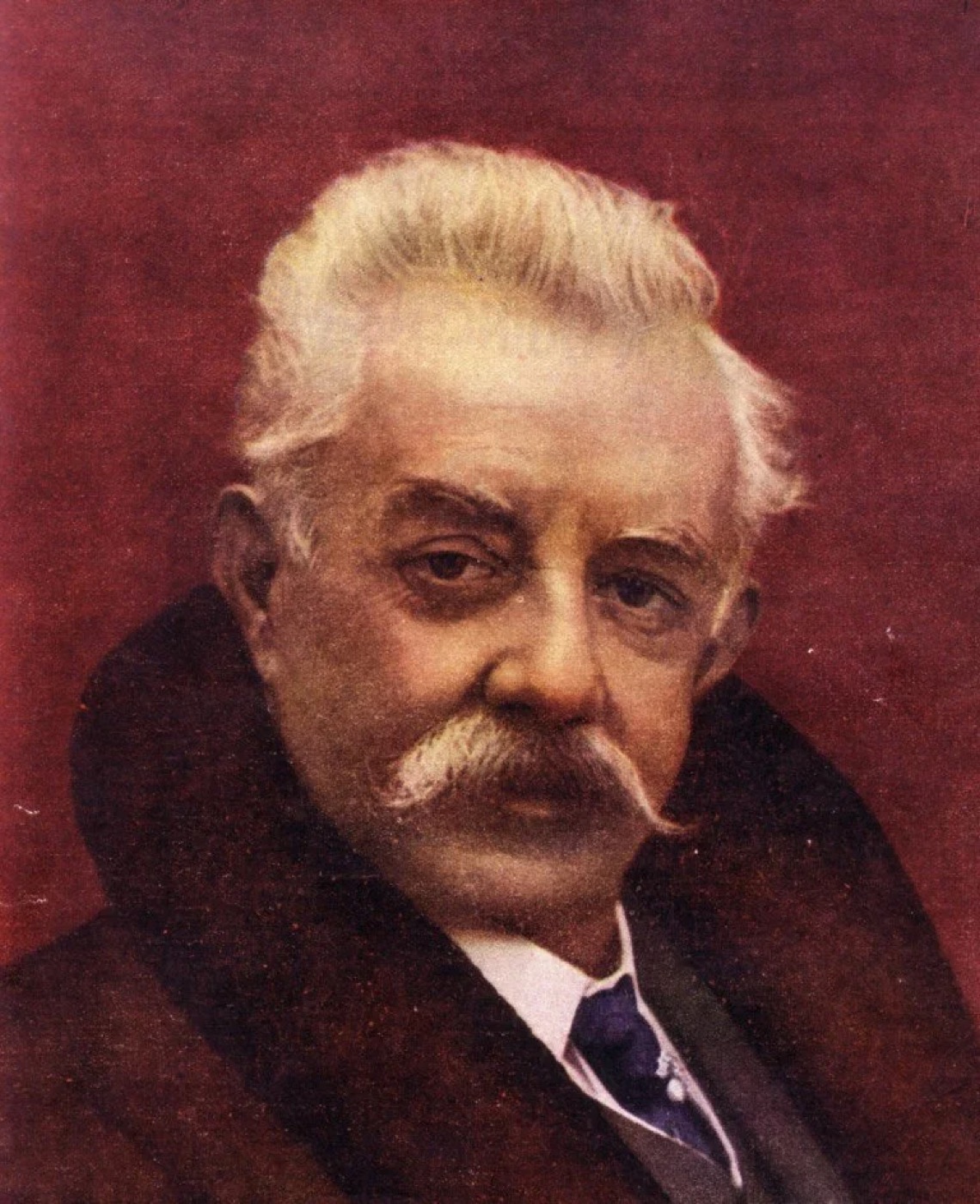
In Madrid, some neighbourhoods are defined by geography, others by architecture… and then there’s Chueca, a neighbourhood defined by a signature: that of a composer who, without meaning to, ended up giving his name to a way of living the city. What’s curious is that thousands of people say “let’s meet in Chueca” without realising that Chueca was Federico: a Madrileño, quintessentially local, quick with a melody, and with an almost unfair talent for turning the everyday (a street, a rumour, a trend, a political argument) into catchy music.
Federico Chueca: the Madrileño who ended up naming a neighbourhood
Federico Chueca was born in Madrid on 5 May 1846 in a place that already sounds like a novel: the Torre de los Lujanes, in the Plaza de la Villa. From there, his life was that of someone who saw the city as a stage: he wrote sainetes (short comic plays), revistas (musical revues) and zarzuelas (Spanish operettas), leaving behind a musical portrait of popular Madrid that still works today as the “soundtrack” of its festivals and street parties.
The important thing isn’t memorising titles, but understanding his superpower: Chueca composed Madrid. Not “about” Madrid, but “to” Madrid: his music spoke the language of the street, with humour, double meanings, and that touch of irony that allows you to criticise without being solemn. And when an artist achieves that, they’re no longer just a composer: they become a cultural symbol.
The Madrid that made him famous: the “género chico” and the theatre-by-the-hour craze
To understand why Chueca became a hit, you need to picture Madrid at the end of the 19th century: a city hungry for quick entertainment, affordable tickets, and performances that fit into real life. Enter the género chico, a form of short, popular zarzuela that thrived thanks to its brevity, local flavour, and comic tone, with recognisable music and themes tied to current events. It wasn’t “minor art”: it was the perfect format for a city starting to move at a new pace.
And if we’re talking about pace, there’s one key name: Teatro Apolo, known for years as the “cathedral of the género chico”. It was located at Calle de Alcalá, 45, opened in 1873, and disappeared in 1929. This was Chueca’s ecosystem: a Madrid where entertainment wasn’t a luxury but a habit, and where artists who connected best with their audience became true popular phenomena.
Two key works to understand his legacy
If you had to pick two titles to “get” Chueca without studying music, these would be it, because they explain his style and cultural impact.
1) La Gran Vía (1886): when a new street becomes a storyline. La Gran Vía premiered on 2 July 1886 at the Teatro Felipe (a summer theatre) and, after its success, moved to the Teatro Apolo, where it stayed on the bill for years. Its brilliance is almost journalistic: it turns an urban topic — the opening of a major thoroughfare to connect old and modern Madrid — into a musical revue where streets and squares “speak”, protest, mock, and portray themselves. In other words: Chueca doing what he did best, making Madrid sing about Madrid.
2) Agua, azucarillos y aguardiente (1897): summer in Madrid, street parties, and a social snapshot. This zarzuela premiered at the Teatro Apolo on the night of 23 June 1897. It’s one of those works that condenses popular Madrid with humour and rhythm: recognisable characters, a street atmosphere, cheekiness, and music that sticks with you (even if you’re not “into zarzuela”). And here’s Chueca’s hallmark: portraying the city without idealising it, but with affection.
From there, his catalogue is vast, and even the City Council, when discussing the square, cites him as the author of works like Agua, azucarillos y aguardiente and other well-known zarzuelas and revues.
Why “Chueca” is Chueca: the square, the name change, and the domino effect
Here’s the fact that makes it all click: the square we now know as Plaza de Chueca got its current name in 1943, “in memory of the author”, and that name ended up giving the neighbourhood its name in popular usage. Before that, the area was known as Plaza de San Gregorio.
Over time, the square became an iconic spot in the Centro district: pedestrianised, close to Gran Vía and Hortaleza, and since the late 20th century associated with LGTBI identity and the energy of Pride. In 2023, the City Council also installed new ceramic plaques featuring the composer’s face and name, visually reinforcing the connection between the man and the place.
The summary is simple: it’s not that Federico Chueca lived “in Chueca” (the neighbourhood as we know it today), but that the city decided to honour him with a square, and that square ended up lending its name to an entire urban identity.
A short walking route to tell the story (and experience it): 5 stops with history
No need to get academic: Chueca is best understood by walking and looking with purpose. Here are five stops to turn his story into a blog with photos, anecdotes, and context.
1) Plaza de Chueca (the proof of it all). Start at the kilometre zero of the name: a small, pedestrianised square with just the right amount of city centre buzz and that feeling of “things happen here” even if it’s a Tuesday. On the corners with San Gregorio and Gravina, you’ll find the plaques featuring his portrait and name — a perfect detail to open your post with a photo that says: “this man existed, he’s not a myth”. Insider tip: come early for a clean shot; by mid-afternoon, the square is a lively snapshot of Madrid life.
2) The edge of Gran Vía (the nod to his most urban work). From the square, you’re a step away from the start of Gran Vía, and here the blog gains depth: La Gran Vía isn’t just a title, it’s a way of narrating Madrid as transformation, as public works, as a clash between the old and the modern. Insider tip: this stretch is perfect for a “before/after” paragraph: the Madrid Chueca satirised and the Madrid of today, still debating (almost) the same things.
3) Calle de Alcalá, 45 (where Teatro Apolo once stood). Even though the building no longer exists, the fact is powerful: Teatro Apolo was the temple of the género chico, located at Alcalá 45, opened in 1873, and closed for good in 1929. Here the blog gets cinematic: you can talk about “theatre by the hour”, people spilling out at midnight, and nocturnal Madrid before nightclubs. And, most importantly, you can connect it to Agua, azucarillos y aguardiente, which premiered there on 23 June 1897.
4) Plaza de la Villa (Torre de los Lujanes): his literal Madrileño roots. To avoid the post being only about “Chueca-the-neighbourhood”, add his origin: Federico Chueca was born in the Torre de los Lujanes. It’s a historically significant and photogenic location, perfect for discussing old Madrid coexisting with modern Madrid (once again, the tension he turned into music).
5) The final idea: Chueca as the soundtrack of street parties. End the route (and the article) with a phrase that ties it all together: the City Council reminds us that Chueca’s music is part of the “soundtrack” of Madrid’s popular festivals. This lets you wrap up with a neat conclusion: Chueca isn’t just a name on a map, he’s a creator who still sneaks into the city every time Madrid takes to the streets.
What Federico Chueca really left behind
Federico Chueca didn’t need to “be serious” to be important. He did something harder: he translated a city into music, capturing its humour, its chaos, its characters, and its contradictions, and gave it back to the public in a format that the Madrid of his time could enjoy and celebrate. That’s why his surname outlived his era, became a square, and the square became a neighbourhood. And that’s why this blog works: because it doesn’t just tell a biography, it tells how a creator becomes inseparable from a city.
Radio Patio
Keep reading
Rutas culturales desde Chueca: teatros y cine en el centro
Explora teatros, cines y espacios culturales cerca de Chueca. Desde clásicos como el Teatro Lara hasta el Cine Doré, descubre el Madrid cultural.
Los alojamientos más cómodos cerca del Mercado de San Antón
Descubre alojamientos cómodos y prácticos a pocos minutos del Mercado de San Antón en Chueca, Madrid. ¡Explora el barrio desde la Plaza de Pedro Zerolo!
Un día en el Museo del Romanticismo: visita desde Chueca
Descubre el Museo del Romanticismo en Madrid, cerca de Chueca. Vive el siglo XIX con arte, cultura, actividades y un jardín encantador.