

Radio Patio
Madrid Book Fair 2026: a guide with insight
Quick history, recommended stalls with numbers, and emerging authors to follow in 2026. Perfect for planning your visit.
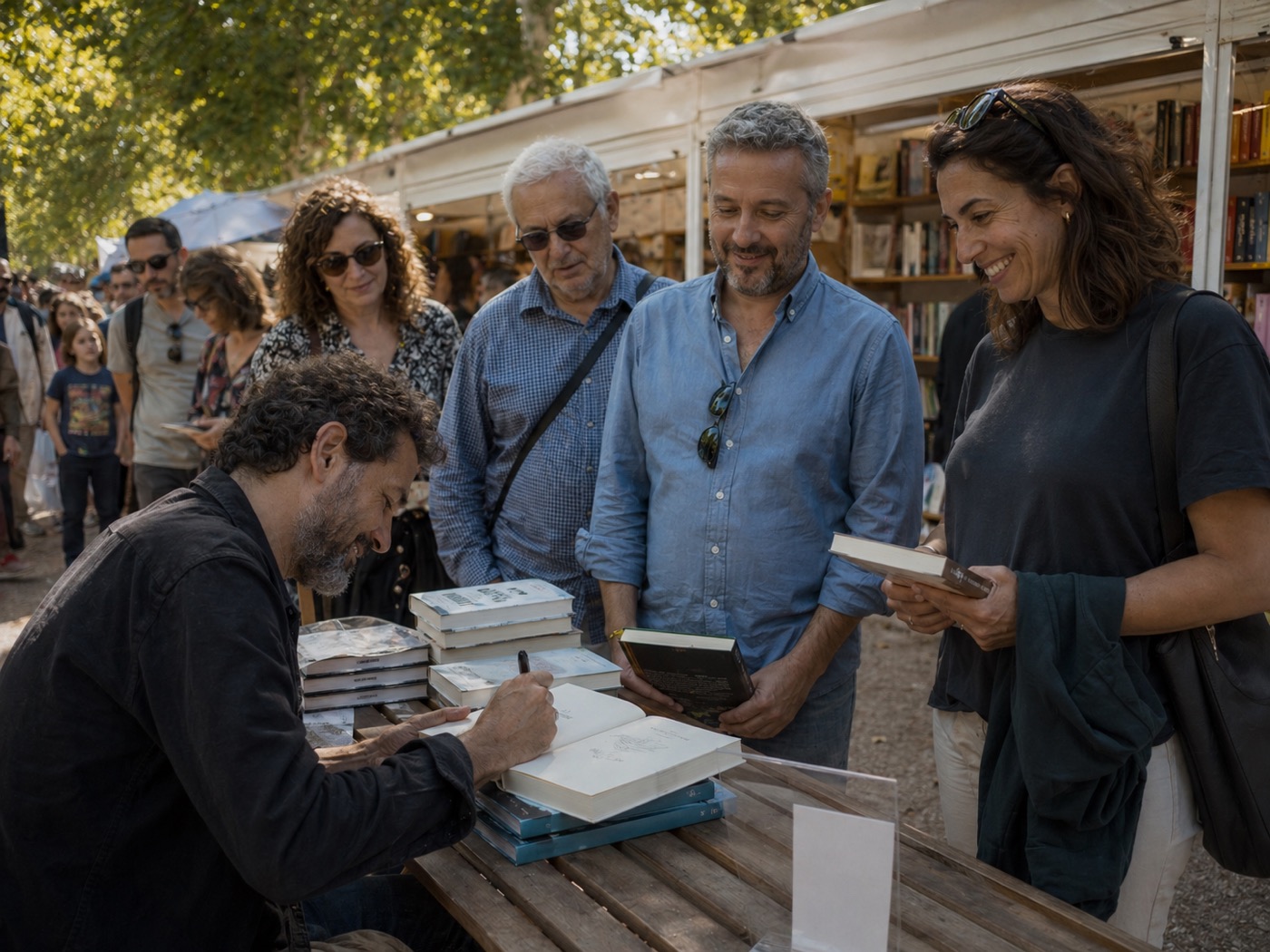
The Madrid Book Fair is back, turning El Retiro into that place where you say, “I’m just browsing,” but leave with a bag as heavy as carry-on luggage. The 2026 edition is special: the 85th edition, running from 29 May to 14 June in El Retiro Park, with a theme that changes everything—humour as a way of reading (and resisting).
The Madrid Book Fair didn’t start in El Retiro, nor was it the size we now take for granted. According to the Fair itself, the first edition was held in 1933, during Cervantes Week (23–29 April), with stalls on Paseo de Recoletos and even loudspeakers for live talks by officials and writers (very proto-podcast, but with megaphones). In 1934, it was renamed the “National and Hispano-American Fair,” held in May, and established itself as a publishing showcase. Then came 1935 and 1936, and the Spanish Civil War opened a hiatus that lasted until 1944, when it returned as the National Book Fair.
The big spatial shift came in 1967, when the Fair moved to its iconic location: El Retiro. The reason was as simple as it was inevitable: the number of bookshops, publishers, and distributors was growing, and they needed space (literally). By 1982, it adopted its current name, Feria del Libro de Madrid, and cemented itself as a cultural ritual in the city. In 2026, the Fair also pushes a clear idea: this year’s theme is humour, with a poster by Miguel Pang and a programme that aims to champion laughter as a critical lens.
This isn’t an endless list (because that would be cruel): it’s a selection with specific stalls and clear reasons to visit. Useful note: in 2026, the Fair has allocated 366 linear stalls (plus those for trade groups and specific areas), so having a mental mini-map can save you hours.
1) For essays, critical thinking, and long conversations (no rush): If you’re the type to leave the Fair with a book that changes your perspective, head to Ediciones Akal (stall 356): they usually have a strong catalogue in history, social sciences, and critical thought, perfect for readers who want a challenge. And if you’re interested in cultural memory and recent history, Ediciones 98 (stall 401) is a great discovery stop—one of those places where you end up chatting with the bookseller and leave with an unexpected recommendation.
2) For fantasy, horror, and “I read it in one go”: In genre fiction, the Fair gets serious (even though 2026 is the “humour edition”): Editorial Drakul (stall 105) is a good bet if you’re after fantasy, thrillers, and fast-paced reads. And if you like stories with a classic feel, adventure, and a touch of epic, Quaterni (stall 261) is often the stall where “just one” turns into “okay, two…”.
3) For LGTBIQ+ literature and fresh perspectives (unfiltered, heartfelt): This is very “Madrid” and very “now”: Dos Bigotes (stall 69) is one of those stalls that feels intentionally curated, where conversations about identity, desire, humour, and politics turn into reading. If you want a recommendation that will make you laugh and think at the same time, this is often the place to find gold.
4) For education, pedagogy, and books you use (not just highlight): If you’re here because you work in education or are interested in it, Narcea (stall 267) is a strategic stop: manuals, educational reflection, and practical tools. And if you’re looking for cultural proposals linked to education, ICCE (stall 155) has also announced their presence and is a reliable stall when you want purposeful materials.
5) For reading in other languages and Madrid’s cultural mix: If you’re up for a less obvious stop, there are publishers and bookshops bringing international catalogues. For example, Grupo Editorial Diwan has announced stall 288, an interesting lead if you’re looking for literature and thought in dialogue with other cultures.
Emerging writers to watch this year
As the Fair reminds us in its FAQs, the signing calendar is uploaded by exhibitors after 23 April and updated progressively on the website and app. So, if you’re coming to “hunt” for signatures, it’s worth checking closer to your date. That said, here are new/emerging voices in 2026 worth following (and, if they’re signing, mentally highlighting):
CTA (Middle) — [HOME] If you like this kind of “insightful” guide (not empty lists), we’ve got more cultural plans around Madrid to make your trip meaningful.
How to truly enjoy the Fair
You don’t “do” the Book Fair in its entirety; you choose. In 2026, with humour as the theme, the perfect plan is simple: a short loop for browsing, two or three stalls with intent (the ones above make it easy), and a new read to accompany you for the rest of your trip. El Retiro does its part: shade, a stroll, and that feeling that, for a few days, Madrid organises itself around books.
Radio Patio
Keep reading
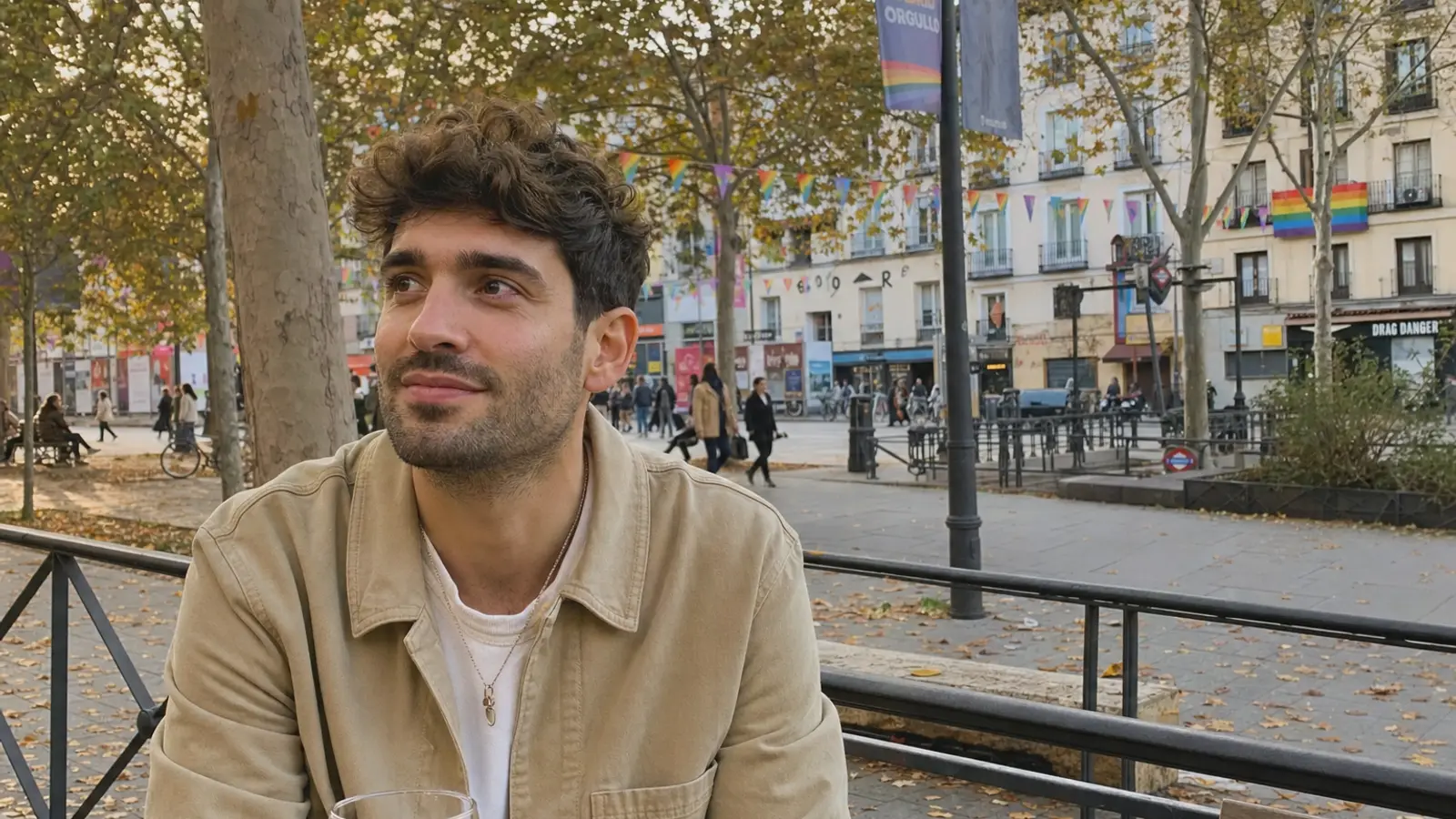
Cómo celebrar el Orgullo si visitas Chueca por primera vez
Descubre consejos prácticos para disfrutar del Orgullo en Chueca: eventos, programa MADO, transporte, gastronomía y actividades culturales imperdibles.
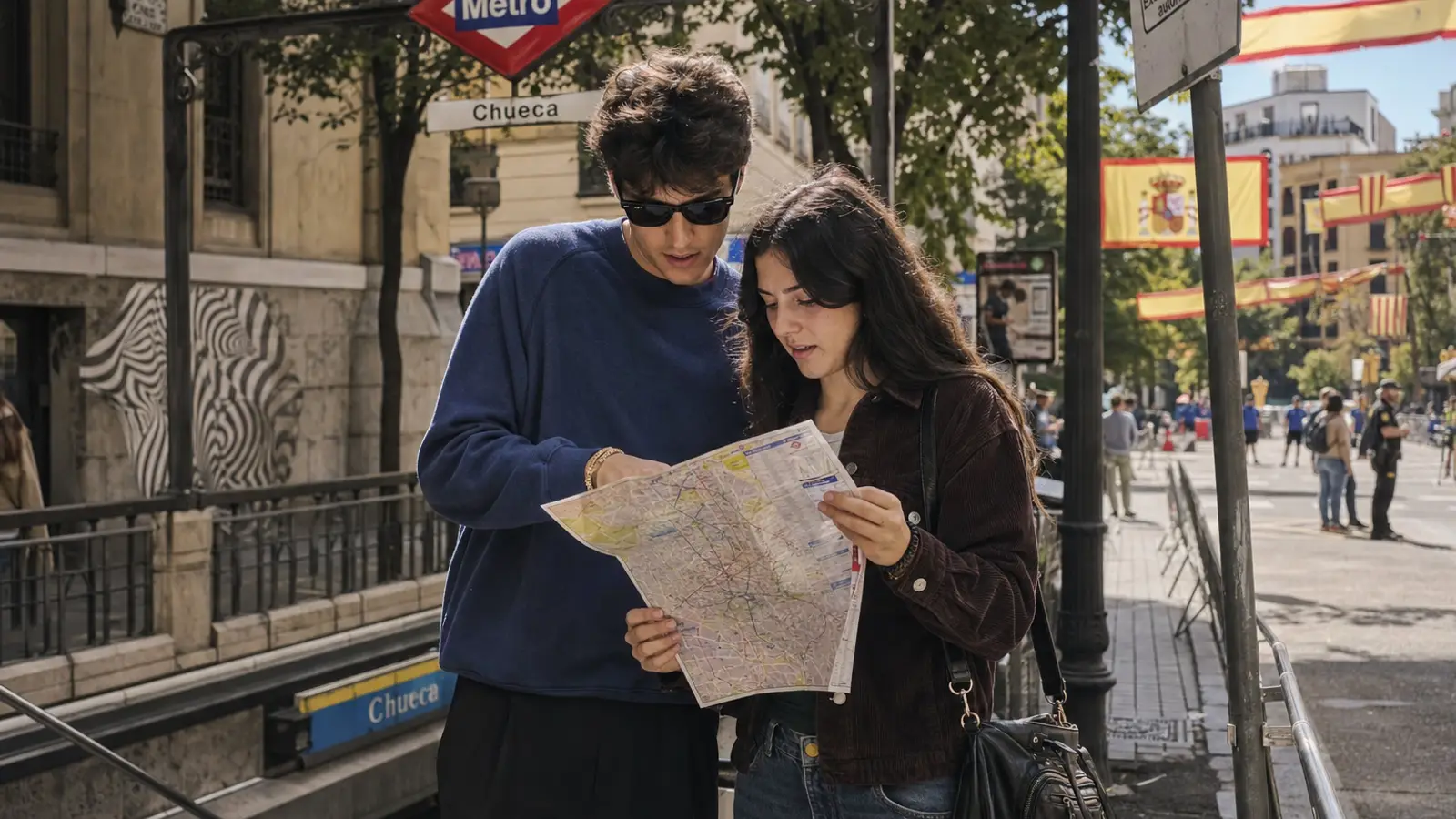
Guía del 12 de Octubre: cortes de tráfico y cómo moverte por el centro
Descubre los cortes de tráfico y cómo desplazarte por el centro de Madrid durante el desfile del 12 de Octubre. Horarios, rutas alternativas y consejos.

Calle Fuencarral: tiendas y secretos entre Chueca y Malasaña
Explora la Calle Fuencarral, el corazón entre Chueca y Malasaña. Tiendas, arte urbano, gastronomía y rincones únicos te esperan en este vibrante paseo.