

Radio Patio
María de Maeztu and the Lyceum Club in Chueca
Learn about María de Maeztu and the Lyceum Club's impact in Chueca, their headquarters at Casa de las Siete Chimeneas, and their legacy in Spain.
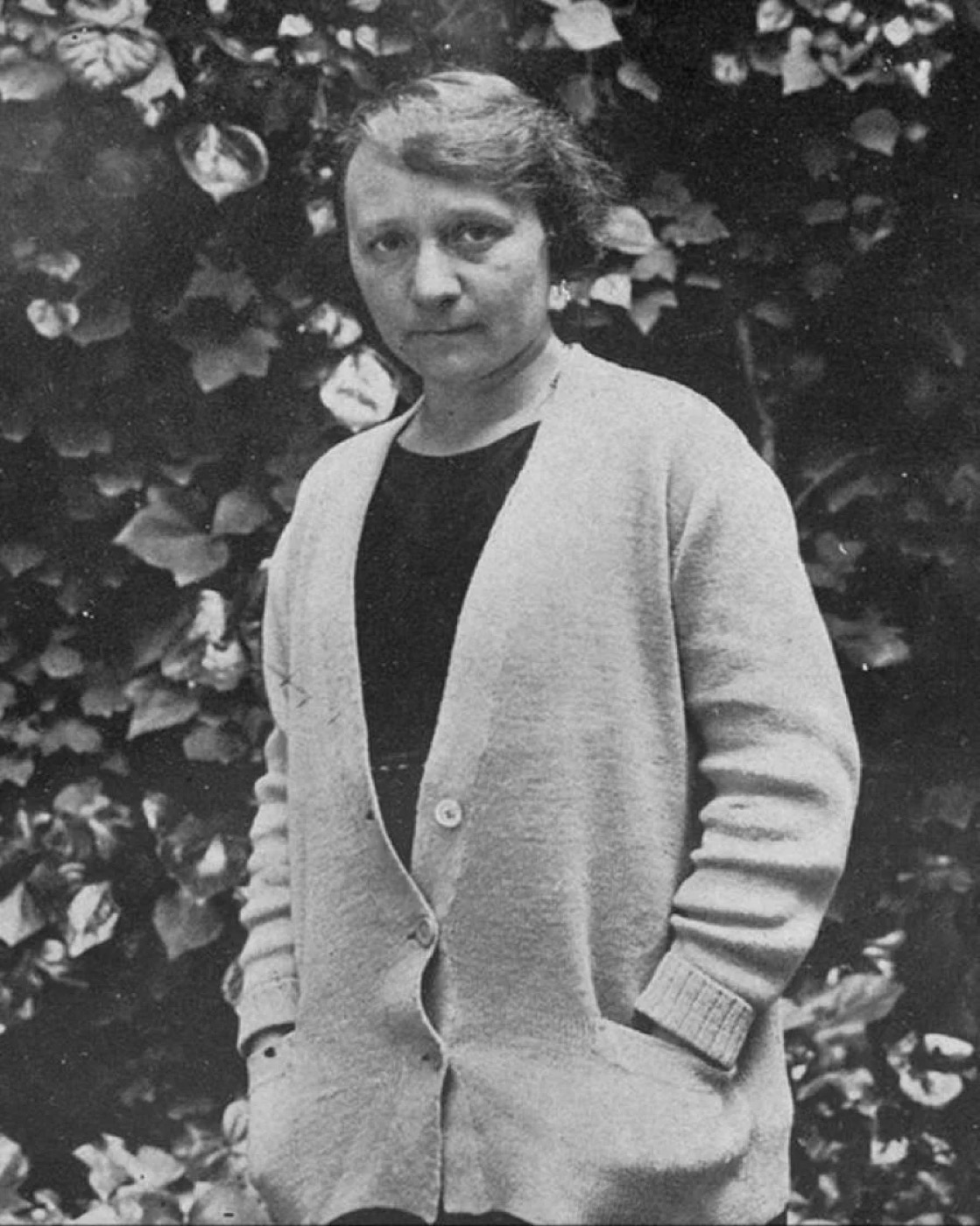
Chueca is social, of course. But before it became the neighbourhood of meet-ups and lively squares, it was also the backdrop for a story that doesn’t get told enough: the Lyceum Club Femenino, a network of women who, in a deeply conservative Spain, came together to think, create, and push for rights. And here’s the bit that’s most relevant for this blog: their first headquarters was in the Casa de las Siete Chimeneas (Plaza del Rey, corner of Calle de las Infantas), a building with a plaque commemorating this history.
María de Maeztu: education as a life plan
María de Maeztu (1881–1948) wasn’t just “a pioneer”; she was a strategist for education. The Biblioteca Nacional (National Library) summarises her career with clear milestones: in 1915 she became director of the Residencia de Señoritas, and in 1926 she founded the Lyceum Club Femenino.
The Residencia de Señoritas (created by the Junta para Ampliación de Estudios, a governmental body for academic advancement) was a groundbreaking project for its time: a place where women could live, study, and build a university future in Madrid. Under Maeztu’s leadership, it aimed to open real doors, not just provide “lessons”. The Ministry of Education (central library) and the Fundación Ortega-Marañón describe the Residencia as a key centre between 1915 and 1936, with Maeztu at the helm until the outbreak of the Spanish Civil War.
The Lyceum Club Femenino was founded in 1926 and operated in Madrid until 1939. It wasn’t created by chance: it emerged because, in a society where women faced serious legal and social restrictions, there was a need for a space to think out loud, learn together, and create their own agenda. RTVE explains the context: the Lyceum promoted “female fraternity” and hosted discussions on issues like divorce and suffrage, as well as organising conferences and exhibitions.
And the concept was strikingly modern: the Lyceum took inspiration from international clubs (the London model is mentioned in several educational texts) and was organised into sections (social, literature, music, arts, sciences, international, Hispano-American…). The website of the Lyceum’s own memorial project explains this structure and highlights key figures in its leadership.
The 100% Chueca connection: the Casa de las Siete Chimeneas
Here’s the local anchor for a brilliant blog: the building that housed the Lyceum between 1926 and 1939 is the Casa de las Siete Chimeneas, located at Plaza del Rey, corner of Calle de las Infantas. And no, this is NOT “just around the corner” from the hostel (near Plaza/Metro Chueca). It’s in the Chueca–Salesas–Gran Vía area, a reasonable walk through Justicia, but not a “two-minute stroll”. The beauty is that it’s still walkable.
In 2017, the City Council placed a commemorative plaque to keep the memory of the Lyceum alive in the building, explicitly noting that it was the club’s headquarters during that period. Today, the building is owned by the Ministry of Culture (as noted in the municipal announcement) and is listed as one of its sites in official tourist information.
What happened inside: a “club” that was really a network for the future
It’s easy to imagine the Lyceum as “ladies having tea”. Wrong. It was a place where women built cultural and political capital: conferences, exhibitions, debates, professional networks, social projects. El País describes how, in a hostile environment, members were even attacked with labels like “unpatriotic” or “destructive” because their existence broke the expected script.
The list of names is impressive, mixing very different profiles. Educational sources mention board members with María de Maeztu as president and figures like Victoria Kent or Zenobia Camprubí in key roles, alongside members of the highest cultural calibre. The powerful idea for El Patio is this: in the centre of Madrid, a group of women created a safe space to talk about what couldn’t be discussed (rights, education, autonomy), but also to produce culture, knowledge, and community.
The end: closure, appropriation of the narrative… and recovered memory
The Lyceum was interrupted by the war and ultimately shut down, and the story takes a harsh turn: El País summarises how the building became associated with the Club Medina, linked to the Sección Femenina (Women’s Section of the Franco regime), in a strong symbolic shift (from a space of emancipation to a tool of the regime).
The positive — and very 2026 — aspect is that there’s an active recovery of this memory. This year, journalistic pieces have been published for the centenary, recalling its role and the calibre of the women who made it possible. The plaque on the Casa de las Siete Chimeneas is key because it grounds everything: “this happened here”, on a corner you might walk past on your way to Gran Vía.
How to “visit” the Lyceum today (without making things up)
Important to avoid false promises: the Casa de las Siete Chimeneas doesn’t function as a standard museum you can visit; it’s an institutional building. What you can do is a realistic cultural plan:
Chueca isn’t just about nightlife: it’s a neighbourhood built on community. And the Lyceum was exactly that a century ago: a community organised so women could have a voice, an agenda, and a space. The plaque on the Casa de las Siete Chimeneas writes the ending for you: this isn’t an abstract story; it’s a concrete place. And at El Patio, where people come to meet others from all over the world, that idea resonates strongly: when a city opens spaces, it changes lives.
Radio Patio
Keep reading
Cómo celebrar el Orgullo si visitas Chueca por primera vez
Descubre consejos prácticos para disfrutar del Orgullo en Chueca: eventos, programa MADO, transporte, gastronomía y actividades culturales imperdibles.
Guía del 12 de Octubre: cortes de tráfico y cómo moverte por el centro
Descubre los cortes de tráfico y cómo desplazarte por el centro de Madrid durante el desfile del 12 de Octubre. Horarios, rutas alternativas y consejos.
Calle Fuencarral: tiendas y secretos entre Chueca y Malasaña
Explora la Calle Fuencarral, el corazón entre Chueca y Malasaña. Tiendas, arte urbano, gastronomía y rincones únicos te esperan en este vibrante paseo.